

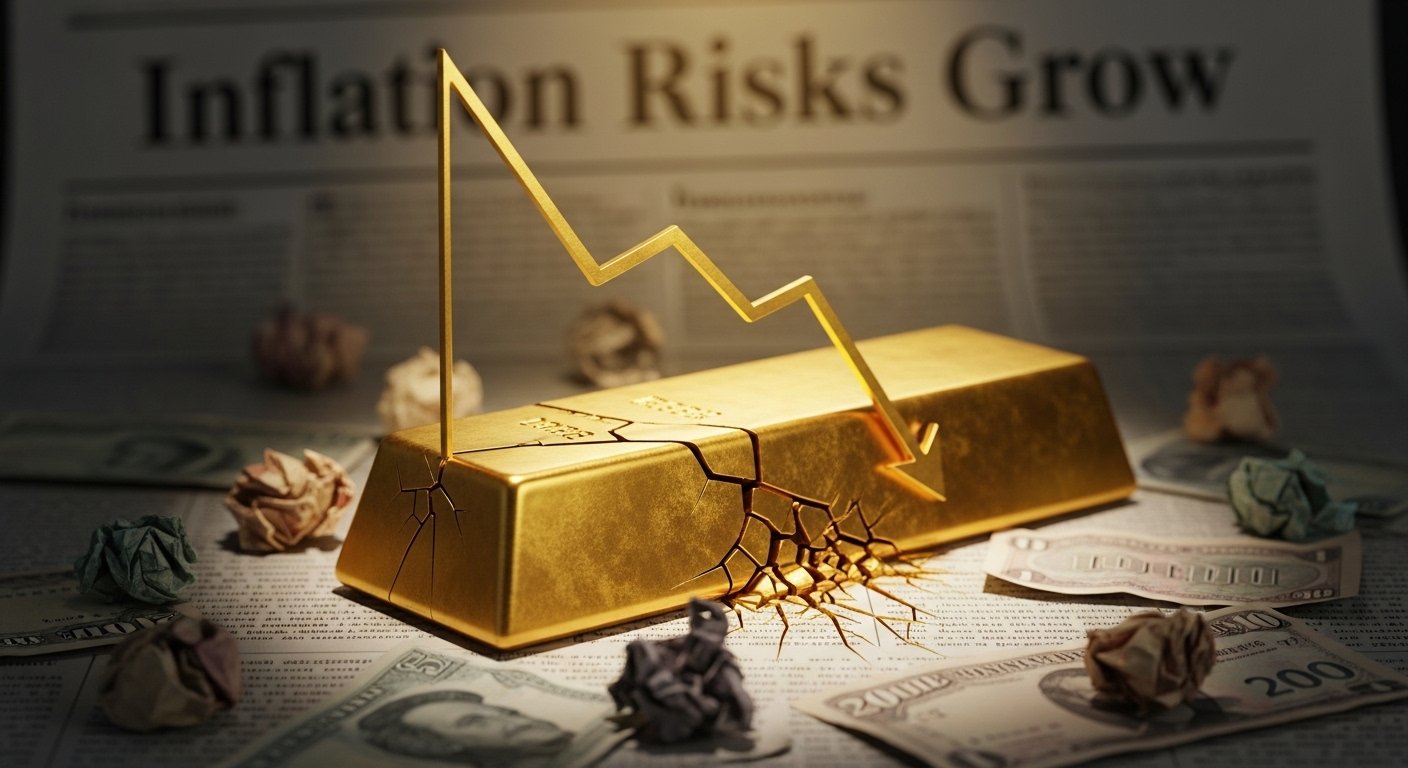
When Gold prices fall amid inflation risks, it reflects deeper macroeconomic forces at play. Investors are recalibrating portfolios as they weigh interest rate trajectories, real yields, and global growth concerns. While inflation remains elevated in several major economies, gold’s recent pullback suggests traders are focusing more on monetary policy tightening than on inflation hedging.
In this comprehensive market analysis, we explore why Gold prices fall amid inflation risks, how central bank policies are shaping precious metals markets, and what investors should watch in the coming months.
Gold Prices Fall Amid Inflation Risks: Understanding the Paradox
At first glance, it seems counterintuitive. Inflation erodes purchasing power, and gold has historically acted as a hedge against inflation. So why do Gold prices fall amid inflation risks?
The answer lies in interest rates and real yields. Gold does not generate income. Unlike bonds or dividend-paying stocks, it offers no yield. When central banks raise interest rates to combat inflation, bond yields increase. Higher yields make income-generating assets more attractive relative to gold.
As inflation persists, policymakers often respond aggressively. This can strengthen the US dollar and push Treasury yields higher, creating downward pressure on gold prices. Thus, while inflation fears exist, the market’s focus shifts to how central banks react to those fears. If rate hikes outpace inflation expectations, real yields rise—and gold struggles.
The Role of Central Banks in Gold’s Decline
Interest Rates and Real Yields
When analyzing why Gold prices fall amid inflation risks, real yields become critical. Real yields represent nominal interest rates minus inflation. If inflation is high but rates are even higher, real yields increase. Rising real yields typically weigh on gold. Investors can earn higher returns in bonds without taking on commodity price volatility. This dynamic explains recent selling pressure in precious metals markets.
Federal Reserve Policy Expectations
Markets closely monitor signals from the Federal Reserve regarding interest rate decisions. Hawkish commentary often strengthens the dollar and pushes gold lower. When traders anticipate prolonged tight monetary policy, gold faces headwinds. Even persistent inflation may not support gold if policymakers remain committed to restrictive conditions.
US Dollar Strength and Gold Price Pressure
The US dollar plays a pivotal role in gold pricing. Because gold is priced in dollars globally, a stronger dollar makes gold more expensive for foreign buyers.
When Gold prices fall amid inflation risks, dollar strength often contributes to the decline. Investors seeking safety during inflationary periods sometimes prefer holding cash in dollars rather than commodities. A rising dollar index amplifies gold’s downside momentum. Emerging markets may reduce gold purchases when currency exchange rates become unfavorable.
Bond Yields and Investor Rotation
Rising Treasury yields significantly impact gold markets. When bond yields climb, capital often flows out of non-yielding assets like gold and into fixed-income securities.
This rotation becomes more pronounced during inflationary cycles when central banks signal tighter policy. Investors chasing higher yields may sell gold to rebalance portfolios. Therefore, when Gold prices fall amid inflation risks, it is often because investors believe inflation will lead to sustained higher rates rather than runaway price instability.
Market Sentiment and Safe-Haven Demand
Gold has long been considered a safe-haven asset during geopolitical uncertainty and economic turbulence. However, safe-haven flows can shift between gold, the US dollar, and even government bonds. If markets perceive that central banks have inflation under control, safe-haven demand for gold may weaken. Investors may feel more comfortable holding equities or bonds instead. In recent sessions, sentiment has reflected cautious optimism about economic resilience. This reduces panic-driven buying of gold, contributing to downward price pressure.
Inflation Expectations vs Actual Inflation
There is a key difference between actual inflation data and inflation expectations. Gold often reacts more strongly to changes in expectations than to reported data. If inflation readings remain high but investors believe they will decline in the future, gold may fall. Conversely, if expectations suddenly spike, gold could rally even before official data reflects it. When Gold prices fall amid inflation risks, it may indicate that markets anticipate inflation peaking or central banks effectively containing it.
Technical Analysis: Key Support and Resistance Levels
Technical traders closely watch price patterns when gold weakens. Support levels act as potential floors where buying interest may emerge. Resistance levels cap upward momentum. If Gold prices fall amid inflation risks, breaking key support zones could accelerate selling pressure. Conversely, a rebound from strong support could signal renewed demand. Indicators such as the Relative Strength Index (RSI) and moving averages provide additional context. Oversold conditions may attract bargain hunters seeking long-term value.
Gold ETFs and Institutional Flows
Exchange-traded funds (ETFs) holding physical gold provide insight into institutional demand. Outflows from gold ETFs often coincide with declining prices.

When investors reduce exposure through ETFs, it reflects reduced confidence in short-term upside potential. This trend often aligns with rising yields and dollar strength. Monitoring ETF flows helps explain why Gold prices fall amid inflation risks despite macroeconomic uncertainty.
Global Economic Growth and Commodity Markets
Economic growth projections also influence gold prices. Strong growth can boost industrial demand for commodities but may reduce safe-haven demand for gold. If markets expect economic resilience despite inflation, gold may struggle. Conversely, stagflation fears—where growth slows while inflation remains high—could revive gold’s appeal. The interplay between growth forecasts and inflation risks shapes investor behavior across commodity markets.
Comparing Gold with Other Inflation Hedges
Gold is not the only inflation hedge. Investors may turn to real estate, commodities, inflation-protected securities, or even cryptocurrencies. When Gold prices fall amid inflation risks, it may indicate that capital is flowing into alternative assets perceived as offering better returns. Diversification strategies often spread exposure across multiple inflation-sensitive assets rather than concentrating solely on gold.
Historical Context: Gold During Past Inflation Cycles
Looking at historical data, gold’s performance during inflationary periods has varied. During the 1970s, gold surged amid runaway inflation and weak monetary control. In more recent cycles, however, gold’s gains have been less dramatic when central banks acted decisively. This historical perspective helps explain why Gold prices fall amid inflation risks in the modern era. Markets are forward-looking and responsive to policy credibility.
Geopolitical Tensions and Gold Volatility
Geopolitical risks often boost gold temporarily. However, if such tensions do not escalate into systemic crises, gains may fade. Investors must distinguish between short-term spikes driven by headlines and long-term trends driven by economic fundamentals. When inflation risks dominate headlines but geopolitical tensions remain contained, gold may struggle to maintain upward momentum.
Retail Investor Behavior and Precious Metals
Retail demand for physical gold, including coins and bars, often rises during periods of economic anxiety. However, retail demand alone rarely drives sustained price rallies. Institutional flows and macroeconomic variables carry greater influence. When Gold prices fall amid inflation risks, it suggests institutional investors are prioritizing yield and liquidity over commodity exposure.
Long-Term Outlook for Gold
Despite short-term weakness, gold retains its strategic importance in diversified portfolios. Central banks worldwide continue holding substantial gold reserves. Inflation dynamics can change rapidly. If real yields decline or the dollar weakens, gold may recover quickly.
Conclusion
The current market landscape highlights a complex paradox. Gold prices fall amid inflation risks not because inflation is irrelevant, but because monetary policy, real yields, and dollar strength dominate investor thinking. For investors, this environment demands careful analysis. Monitor central bank decisions, bond yields, inflation expectations, and currency trends. Gold’s role as a hedge remains intact over the long term, but short-term volatility is inevitable.
See More: Top Economist Issues Major Warning on Stocks and Crypto